Featured
Table of Contents
Signal Kinds in Angular 21 replace FormGroup pain and ControlValueAccessor complexity with a cleaner, reactive design developed on signals. Discover what's new in The Replay, LogRocket's newsletter for dev and engineering leaders, in the February 25th concern. Check out how the Universal Commerce Protocol (UCP) allows AI agents to get in touch with merchants, deal with checkout sessions, and safely process payments in real-world e-commerce flows.
This short article checks out six common mistakes that obstruct streaming, bloat hydration, and produce stale UI in production.
2026 Into Soft Pvt. Ltd. If you want, go Laravel for PHP or Django for Python.
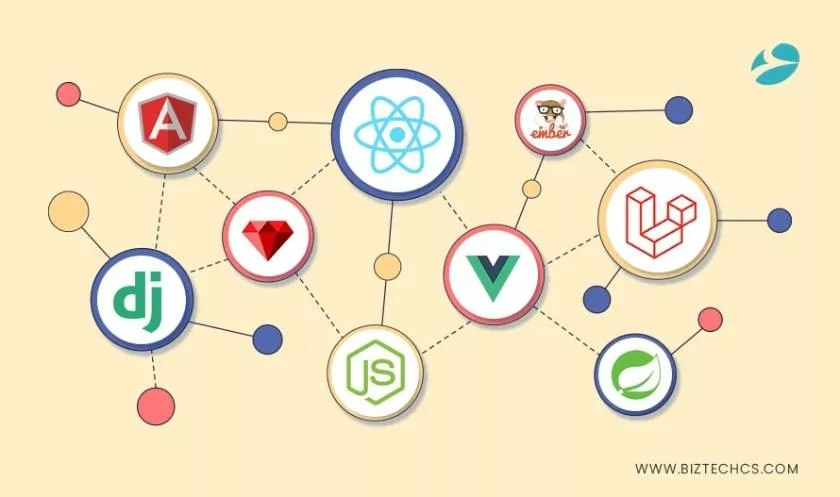
In this guide, we compare the most popular full-stack structures in 2026:,,, and. We likewise include, the structure we're constructing. We think it's a compelling option in this area, and we wished to put it side by side with the recognized players so you can judge for yourself.
The Future in Development Frameworks in 2026
Beyond the usual criteria like designer experience and environment size, we likewise assess how well each framework plays with AI coding tools like Cursor, Claude Code, Codex, Copilot, and OpenCode due to the fact that in 2026, that matters more than ever. We focused on five requirements when assessing full-stack frameworks: How quick can you go from init to a released app? How much configuration and boilerplate do you (not) need to deal with? Exist libraries, plugins, and guides for when you get stuck? Is it being actively kept? How well does the structure work with AI coding assistants? Can an LLM comprehend your job structure and generate correct code? Can you release with a single command, or do you require to configure infrastructure by hand? Does the framework cover the customer, server, and database layer, and just how much assembly is required? All five structures in this guide can be used for full-stack advancement, however they take various methods: These are the original full-stack frameworks.
Their frontend story varies, e.g. Laravel couple with or Livewire, Bed Rails has Hotwire/Turbo, and Django uses design templates or a different medical spa. These are fully grown, battle-tested, and really full-stack. If your definition of full-stack is "handles everything from HTTP demand to database and back," these structures nailed it years earlier. Covers client-side making and server-side logic (API paths, server elements), but the database layer is completely Bring Your Own (BYO).
Wasp takes a different method within the JavaScript environment specifically. It utilizes a declarative setup file that explains your routes, authentication, database designs, server operations, and more in one place. The compiler then produces a React + + Prisma application. Unlike Laravel or Bed rails, Wasp eliminates the need to choose and assemble frontend options, and packages whatever within a single mental design.
Evaluating Headless vs Legacy CMS Solutions
Laravel has been the dominant PHP structure for over a decade, and it reveals no indications of slowing down. Laravel has a long custom of incremental, developer-friendly enhancements. With over and utilized by 61% of PHP designers, Laravel's neighborhood is huge and active. meaningful, ActiveRecord-style database layer integrated auth scaffolding for e-mail with optional WorkOS AuthKit for social auth, passkeys, and SSO fully-managed implementations with Laravel Cloud, or VPS server management with Forge use React or Vue as your frontend with server-driven routing integrated job processing and real-time functions zero-config local development environment Exceptionally mature environment with solutions for nearly every issue Excellent documents frequently mentioned as the gold basic Big task market, especially for companies and SaaS business First-party tools for deployment, billing (Cashier), search (Scout), and more Active release cycle with annual significant versions PHP enjoy it or hate it, lots of JS/Python designers will not consider it Frontend story requires extra setup (, Livewire, or a different medspa) Efficiency needs tuning for high-concurrency applications Business applications, SaaS items, companies, and groups currently bought PHP.
Laravel's constant conventions and excellent documents mean AI tools can create reasonably precise code. Nevertheless, the PHP + JS split (if using Inertia or a React medspa) means the AI requires to comprehend 2 different codebases. AI-coding tools work well with Laravel, however the full-stack context is divided across languages.
Bed rails 8.0 (launched late 2024) doubled down on simplicity with Kamal 2 for deployment, Thruster for HTTP/2, and the Solid trifecta (Solid Cable, Strong Cache, Strong Line) changing Redis dependencies with database-backed options. Bed rails has approximately and a devoted, knowledgeable neighborhood. the ORM that influenced every other ORM release anywhere with zero-downtime Docker implementations modern-day frontend interactivity without heavy JS database-backed infrastructure, no Redis required (brand-new in Rails 8) batteries consisted of for e-mail, jobs, and file submits Convention over configuration means less decision fatigue Extremely efficient for waste applications and MVPs Mature environment with gems for nearly whatever Bed rails 8's "no PaaS" viewpoint makes self-hosting straightforward Strong viewpoints result in constant, maintainable codebases Ruby's task market has actually diminished compared to JS, Python, and PHP.
Bed rails' strong conventions make it fairly predictable for AI tools. Like Laravel, the backend (Ruby) and any modern-day frontend (React via Inertia or API mode) are different contexts the AI should juggle.
With approximately, Django has among the largest open-source communities of any web structure. Its killer advantage in 2026? Python is the language of AI and data science, making Django a natural choice for groups that need web applications securely integrated with ML pipelines. effective, Pythonic database layer with migrations automatic admin interface from your models the de facto requirement for constructing APIs security-first by default NumPy, pandas, scikit-learn, PyTorch Frontend story is the weakest of the five.
How API-First Development Improve SEO Performance
Python is the language AI tools understand best, so Django backend code gets outstanding AI assistance. The detach between Django's backend and a modern JS frontend suggests AI tools struggle with the full-stack picture.

Latest Posts
Key Decisions for Choosing the Next CMS
Building Scalable Ecommerce Stores through API-First Frameworks
How Personalized Messaging Dominates in Enterprise Landscape